History · Sites
The Hidden Templar Cross of Castelo de Vide
7 min read
Five kilometres northwest of Castelo de Vide, along a road that passes through cork oak and cistus scrub toward the village of Póvoa e Meadas, there is a small whitewashed hermitage that almost no tourist guide mentions.
It has no interpretation panel. No admission charge. No opening hours posted on the door. On the Sunday after Easter each year, the farming families of the surrounding villages walk here in procession — a romaria that has been held for as long as local memory records. But on any other day of the year, the Ermida de São Silvestre sits in its open field in near-total silence, visited by almost no one who is not a local.
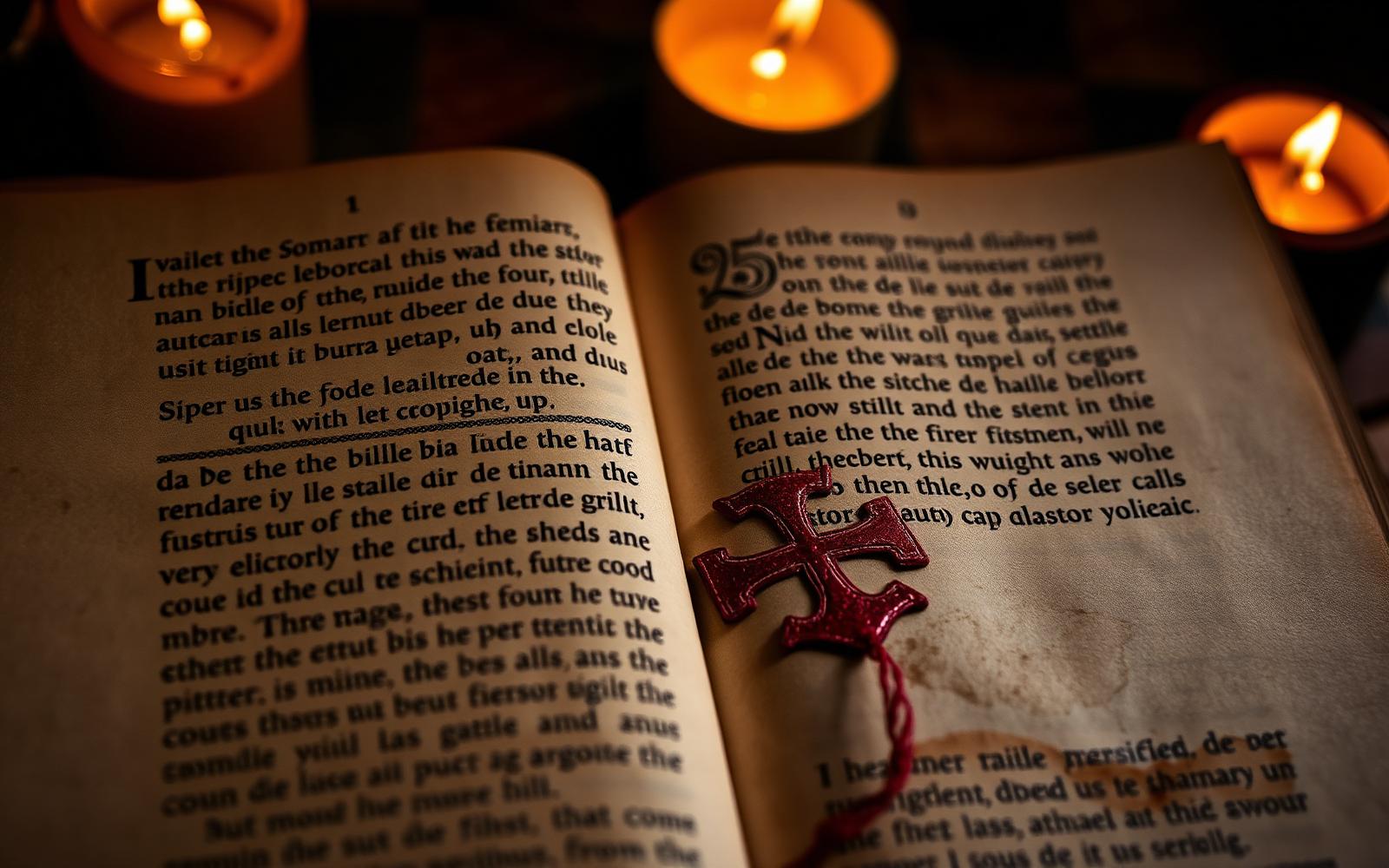
Inside, carved into the keystone of the chapel vault, is the cross of the Order of Christ. The direct successor to the Knights Templar in Portugal. Cut into the stone by hands that have been dust for centuries. Still there.
The Order that left the mark
The cross carved into the vault of São Silvestre is not, strictly speaking, a Templar cross — though the distinction requires a sentence of explanation. The Knights Templar were dissolved by papal decree in 1312. Their Portuguese properties passed in 1319 to the Order of Christ — the Templars under a different name, created specifically to receive them. Its cross — a red cross of Christ on a white field, a direct evolution of the Templar cross — was painted on the sails of every caravel that left Lisbon during the Age of Discovery.
The cross is simultaneously post-Templar and entirely Templar. It is the mark of the successor, carved into the landscape of the predecessor.
The village that the Templars founded
The village of Póvoa e Meadas is believed to have been founded by the Templars themselves, developing around what is now the Igreja da Misericórdia, with documentation placing it within Templar administration between at least 1278 and 1372 — the date of its donation to the Order of Christ.
The rivalry that kept the hermitage alive
The Ermida de São Silvestre sits not in the parish of Póvoa e Meadas but in the term of the neighbouring village of Montalvão — the village whose name may preserve the memory of Montauban. Between Póvoa and Montalvão, there have always been considerable disputes over the hermitage. When the chapel was rebuilt by Eduardo Fragoso, a local benefactor, the people of Póvoa commissioned the restoration and bought a new statue of the saint in painted clay. The people of Montalvão were so aggrieved that they insisted on keeping the old wooden statue in the sacristy for their own private offerings. Two villages. One hermitage. A rivalry running since before anyone can remember.
Why the timing of the romaria is inexplicable
The romaria to the Ermida de São Silvestre is held annually on the Sunday after Easter — a date that has no liturgical connection to Saint Sylvester, whose feast day is the last day of December. The most plausible interpretation is that the Easter-season procession is considerably older than the Christian dedication to São Silvestre — that the site was a place of pre-Christian significance, absorbed into the calendar of the medieval church at a date unconnected to a fourth-century Pope.
What you will actually see
The hermitage is a modest building: a single nave, barrel-vaulted, cool and dim, with the particular smell of old stone and candle wax that rural Portuguese chapels share across the centuries. The cross is in the centre of the vault. It is cut directly into the granite keystone — not painted, not applied, but carved into the stone itself, perhaps thirty centimetres across. The lines are clean. The technique is confident.
Once you know what you are looking at, it is unmistakable. Before you know, it is easy to miss. Look up. Find the keystone. That is what seven centuries looks like in granite.
How to get there
From Castelo de Vide, take the road northwest toward Póvoa e Meadas. After approximately 4.5 kilometres, a track on the right leads across open ground to the hermitage. GPS: 39.5391° N, 7.5245° W. The chapel is generally accessible during daylight hours. Come prepared to find it unattended.